This is my next mini PC.
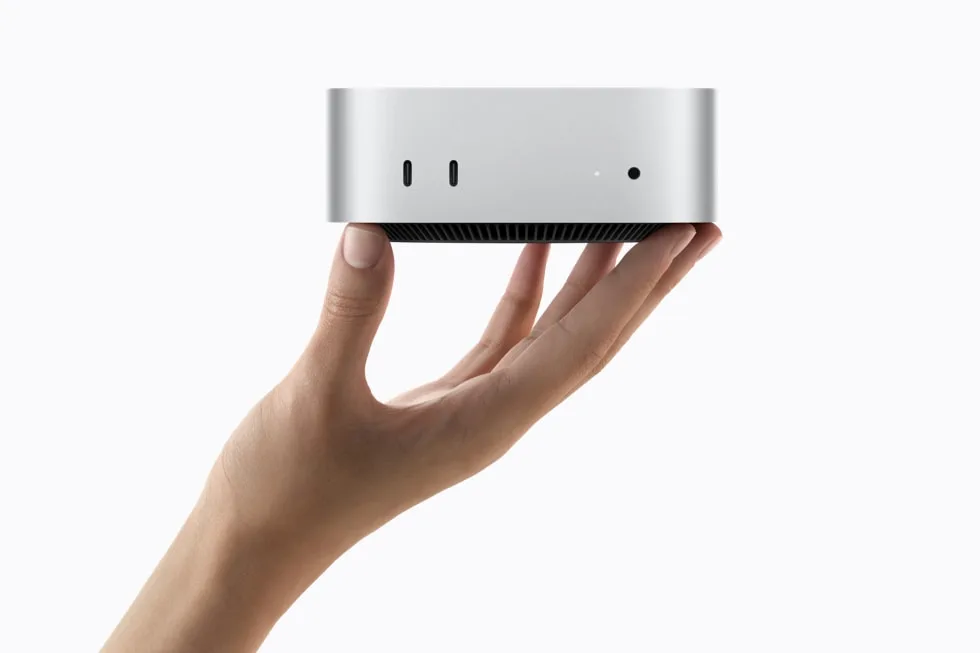
The Mac mini (M6, 16GB).
I don’t want a second desktop, I want a machine small and quiet enough that I forget it’s on, doing the one job I don’t want my gaming rig awake for.”
It’s for the one job I don’t want my desktop doing
My desktop is built for gaming and heavy lifting, not for sitting on 24/7 so a model can stay loaded and my phone can pull a file off it whenever I ask. Every time I’ve left it running overnight for that, it’s felt like using a truck to fetch the mail. The job is small. The machine doing it should be too.
The M6’s unified memory is built for this job
Apple says up to 4x faster at AI tasks than the outgoing M4, which is a vendor number off a vendor benchmark, so I’ve discounted it accordingly. The one I care about is 170GB/s of memory bandwidth, because that is what feeds a model once it’s loaded, not the core count.
Silent and cheap enough to just leave on
A mini idles at a few watts and makes no noise doing it. My desktop’s fans spin up the moment anything heavy lands on it, and I can hear every bit of that.
| Chip | Apple M6, 12-core CPU / 12-core GPU, 16-core Neural Engine |
|---|---|
| Memory | 16GB unified, 170GB/s bandwidth (configurable to 32GB) |
| Storage | 256GB SSD (base config) |
| Ports | 3× rear Thunderbolt 4, HDMI, 2× front USB-C, 2.5Gb Ethernet |
| Wireless | Wi-Fi 7, Bluetooth 6 |
| Size | 12.7 × 12.7 × 5 cm |
| Best under ₹20,000 |
GMKtec G3 Plus (Intel N150, 16GB)
₹18,999
|
Silent, sips power, plenty for Pi-hole/Plex-style home-server dutyThe N150 has no AI muscle to speak of: this is a home server, not an inference box |
|---|---|---|
| Money no object |
Mac mini (M5 Pro, 24GB)
₹2,09,900
|
Thunderbolt 5, more GPU cores and memory bandwidth for bigger local modelsMore than double the M6’s price for headroom I don’t need yet |
| My pick |
Mac mini (M6, 16GB)
₹99,900
|
Apple’s newest chip, a big jump in AI throughput over the outgoing M4, still under a lakh16GB caps how big a local model you can comfortably run before it starts swapping |
Beelink SER9 Pro (Ryzen AI 9 HX 370), if you want a similar always-on AI box on Windows or Linux, with an NPU of its own, and don’t need macOS.
Apple’s "up to 4x faster at AI tasks" figure is a vendor benchmark I haven’t independently verified, and whether 16GB genuinely stays comfortable for daily local-model use (rather than the 24GB/32GB configs) is something I’ll only know once I’m actually running my own workloads on it.
That link is an Amazon.in search, not one exact listing: I haven’t pinned a specific product page until I’ve verified it matches this configuration. If you buy through that link I earn a small commission. It costs you nothing and keeps the picks independent. I accept long-term review units; they never buy the pick, and I say so when a unit was loaned.
Why not just run local AI models on the desktop I already have?
I could. It would mean keeping a power-hungry gaming rig awake around the clock for a background job, though, and the whole appeal of the mini is that it costs me nothing to forget about.
Is 16GB of unified memory actually enough to run local LLMs?
Comfortably for 7B to 8B models, which covers most of what I’d use day to day. Anything bigger means stepping up to the 24GB or 32GB configuration, or the M5 Pro model if I outgrow this one.
Why Apple silicon over a cheaper x86 mini PC?
Mostly efficiency per watt for a box that’s on all day, plus Apple’s MLX framework runs well on the M-series chips. If you don’t need macOS, something like the Beelink SER9 Pro is the cheaper way to the same idea.